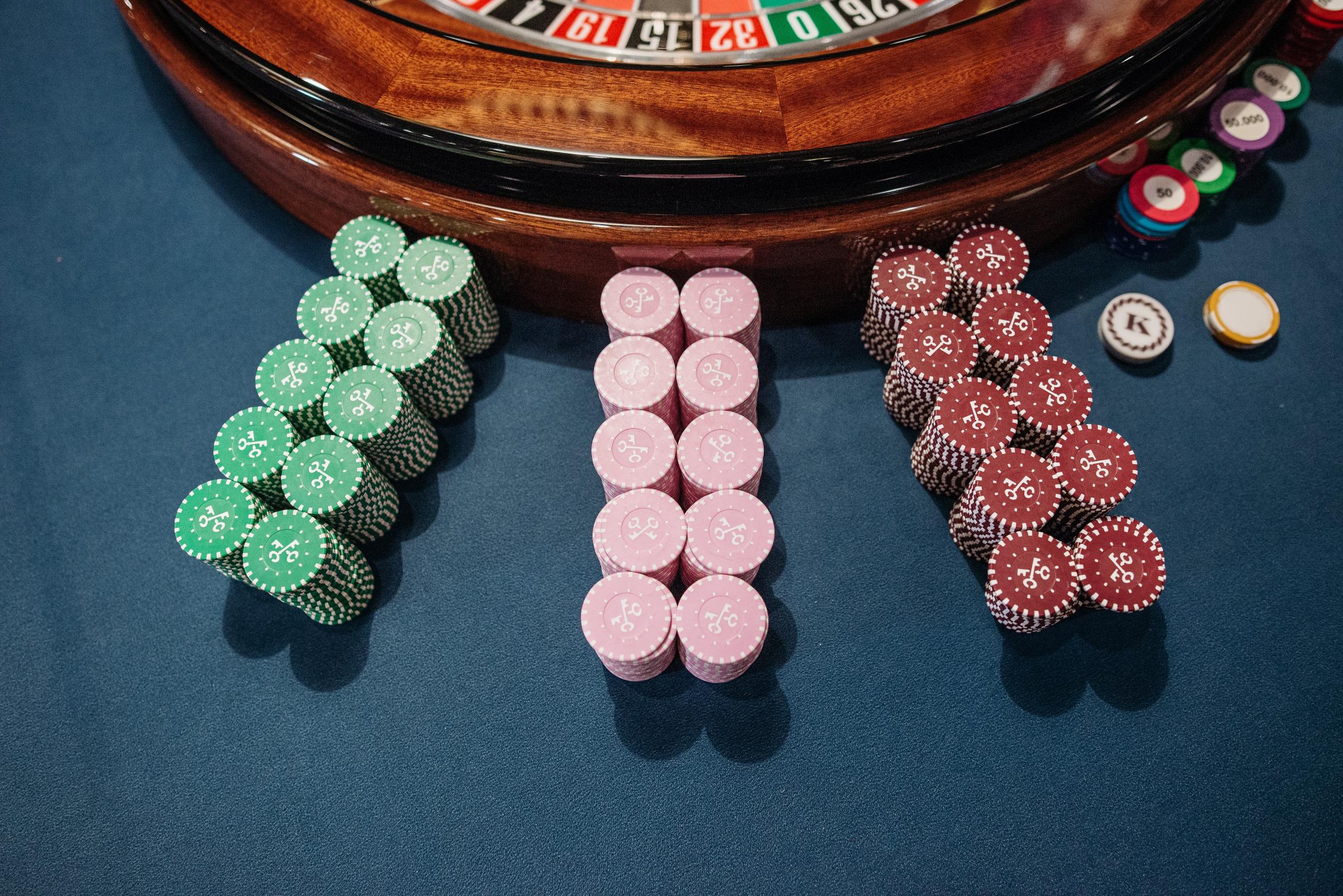
Few casino games carry the same quiet prestige as baccarat. It appears in films, features in the routines of high-net-worth gamblers, and occupies a permanent position in the conversation around elite table gaming. Yet its reputation for exclusivity has long overshadowed something more important: baccarat is genuinely one of the most beginner-friendly games in the casino environment. If you’ve been hesitant to approach the table, the data and the mechanics both suggest you shouldn’t be. When players Try Baccarat (ทดลองบาคาร่า) for the first time in a low-pressure setting, most are surprised by how intuitive the experience actually is.
This guide unpacks the essentials—how the game works, what the numbers say about your chances, and what first-time players consistently get wrong before they find their footing.
Why Baccarat Continues to Dominate Casino Revenue Worldwide
The global casino industry generates hundreds of billions of dollars annually, and baccarat punches well above its weight in that figure. Macau, the world’s largest gambling market by revenue, derives more than 70% of its casino income from baccarat alone. In the United States, baccarat revenue has grown steadily over the past two decades, driven largely by its adoption among players who prioritize clean, fast gameplay over complex strategy.
This isn’t a coincidence. The game’s structure removes the cognitive overhead that makes other table games feel demanding. Players don’t manage cards, calculate pot odds, or respond to opponents’ behavior. They place a bet, watch the cards fall, and collect or move on. For many, that simplicity is the entire appeal.
How Baccarat’s Odds Stack Up Against Other Popular Games
Casino games are not created equal when it comes to player-friendly odds. Baccarat stands out favorably across the board:
Game
House Edge
Baccarat – Banker Bet
~1.06%
Baccarat – Player Bet
~1.24%
Blackjack (basic strategy)
~0.5%
European Roulette
~2.7%
American Roulette
~5.26%
Standard Slot Machines
2%–15%
Blackjack edges out baccarat slightly on paper, but only for players who master basic strategy—a memorization-heavy discipline that takes time to develop. Baccarat delivers near-equivalent odds with zero strategic study required, making it the more practical choice for most newcomers.
Breaking Down the Rules of Baccarat
Baccarat is played with a standard deck (or multiple decks) of cards. Two hands are dealt at the start of each round: the Player hand and the Banker hand. Your role as a participant is simply to predict which hand will be closer to a total of 9.
Card values work as follows:
Aces: Worth 1 point
2 through 9: Worth face value
10, Jack, Queen, King: Worth 0 points
If a hand’s point total exceeds 9, the tens digit is dropped. A total of 17 becomes 7; a total of 14 becomes 4. This system ensures all hand values remain between 0 and 9.
A natural win occurs when either hand totals 8 or 9 on the first two cards. When neither hand achieves a natural, a third card may be drawn—automatically, according to a fixed set of rules that neither the player nor the dealer controls independently. This automation is one of baccarat’s defining features and one of the reasons it requires no in-game decision-making.
The Most Common Mistakes First-Time Baccarat Players Make
Understanding what to avoid is just as useful as knowing what to do. New players regularly make the following errors:
Placing the Tie Bet Too Often
The Tie bet looks attractive because it pays 8:1. However, the house edge on a Tie bet sits at approximately 14.4%—more than ten times the edge on the Banker bet. Occasional Tie bets for entertainment are harmless, but treating it as a primary strategy is a reliable path to faster losses.
Chasing Losses With Larger Bets
Baccarat rounds resolve quickly, which can tempt players into escalating bets after a losing streak. Each round is statistically independent—previous results carry no predictive weight on future outcomes. Increasing bet size to “recover” losses amplifies risk without improving odds.
Ignoring Bankroll Limits Before Playing
Walking into a baccarat session without a pre-set spending limit is one of the most consistent errors documented by responsible gambling researchers. Setting a hard limit—and committing to it—before the first card is dealt is the single most effective protective measure available to any player.
How many decks are used in a standard baccarat game?
Most baccarat games use 6 or 8 decks shuffled together. The number of decks has a minor effect on the house edge but doesn’t change the fundamental rules or gameplay experience.
Does the commission on Banker bets affect long-term returns significantly?
The standard 5% commission on Banker bet winnings is already factored into the quoted 1.06% house edge. Even with the commission applied, the Banker bet remains the most favorable wager at the table.
Are online baccarat games fair?
Reputable online gaming platforms use certified Random Number Generators (RNGs) to ensure each round’s outcome is independent and statistically fair. Look for platforms with recognized third-party auditing certifications as a baseline standard.
Is there a pattern-based strategy that works in baccarat?
No pattern-based system—road maps, bead plates, or streak tracking—alters the house edge. These tools are offered as visual aids, not predictive instruments. The outcome of each hand is determined by random card distribution.
What is mini-baccarat?
Mini-baccarat follows identical rules to standard baccarat but is played on a smaller table with lower betting minimums. It’s faster-paced and generally less formal, making it an ideal starting point for new players.
How should a beginner manage their baccarat bankroll?
A widely recommended approach is the flat betting method—wagering the same amount on every hand rather than adjusting based on wins or losses. Combined with a pre-set session limit, flat betting reduces volatility and extends playing time.
What the Numbers Say About Real Baccarat Sessions
Statistical modeling of baccarat outcomes provides useful benchmarks for player expectations:
A player placing 200 bets on the Banker hand will win, on average, approximately 91 of those bets after the commission is factored in
The theoretical return-to-player (RTP) on the Banker bet is approximately 98.94%
The theoretical RTP on the Player bet is approximately 98.76%
Tie bet RTP drops to approximately 85.6%
These figures represent long-run averages, not session guarantees. Short-term variance can produce both winning and losing sessions regardless of optimal betting. However, over extended play, the math consistently favors the Banker bet as the most sustainable option.
How Risk-Free Baccarat Practice Accelerates Player Confidence
Experienced players consistently report that the gap between understanding a game conceptually and feeling comfortable at a live table is wider than most beginners expect. Hands-on practice in a risk-free environment bridges that gap efficiently.
Spending time in a no-stakes baccarat setting allows players to internalize the game’s rhythm—the pace of card dealing, the announcement of outcomes, the handling of payouts. When real money enters the equation, that familiarity prevents the hesitation and confusion that tend to drive poor decisions.
Your First Step Toward the Baccarat Table
Baccarat’s reputation for sophistication is well-earned, but that sophistication doesn’t translate to complexity. The rules are fixed, the decisions are minimal, and the odds are genuinely competitive. For any player curious about table gaming, it represents one of the clearest entry points available.
Start without pressure. Learn the rhythm. Understand the bets. When the mechanics feel second nature, the transition to real-money play will follow naturally—and confidently.